
Bali Stay Tips
Why Shade Matters More Than You Think in Bali Stays
In Bali, travellers often pay attention to the obvious things first: the pool, the garden, the openness of the living space, the beauty of the architecture, or the way a property looks in photographs at golden hour. But one of the most important details in how a stay actually feels is much quieter than that. It is shade. Not only whether a property has it, but how it uses it. In a warm-climate destination where outdoor living is part of the pleasure, shade is what makes beautiful spaces genuinely livable.
The difference can be surprisingly dramatic. A terrace with no real protection from the sun may look appealing for a few minutes but become difficult to enjoy through the middle of the day. By contrast, a well-shaded lounge, dining corner, or poolside sitting area can turn the same property into a place where people actually want to spend time. In that sense, shade is not just practical. It shapes the rhythm of the whole stay. For broader context on how climate-responsive design works in warm destinations, the overview of Balinese architecture offers a useful starting point.
Comfort Depends on More Than a Pool
Many travellers assume outdoor comfort in Bali comes down mainly to water. A pool certainly helps, but it does not solve everything. What determines whether a property feels restorative is often the relationship between sun and shelter. If every lounger sits in direct midday heat, if the dining area bakes by noon, or if the main outdoor seating only works early or late in the day, the stay begins to feel more limited than it first appeared.
Good shade changes that immediately. It extends the hours when a space can be used and makes outdoor living feel effortless instead of conditional. A stay becomes easier when people can move through the day without constantly searching for relief from brightness and heat.
Shade Softens the Mood of a Property
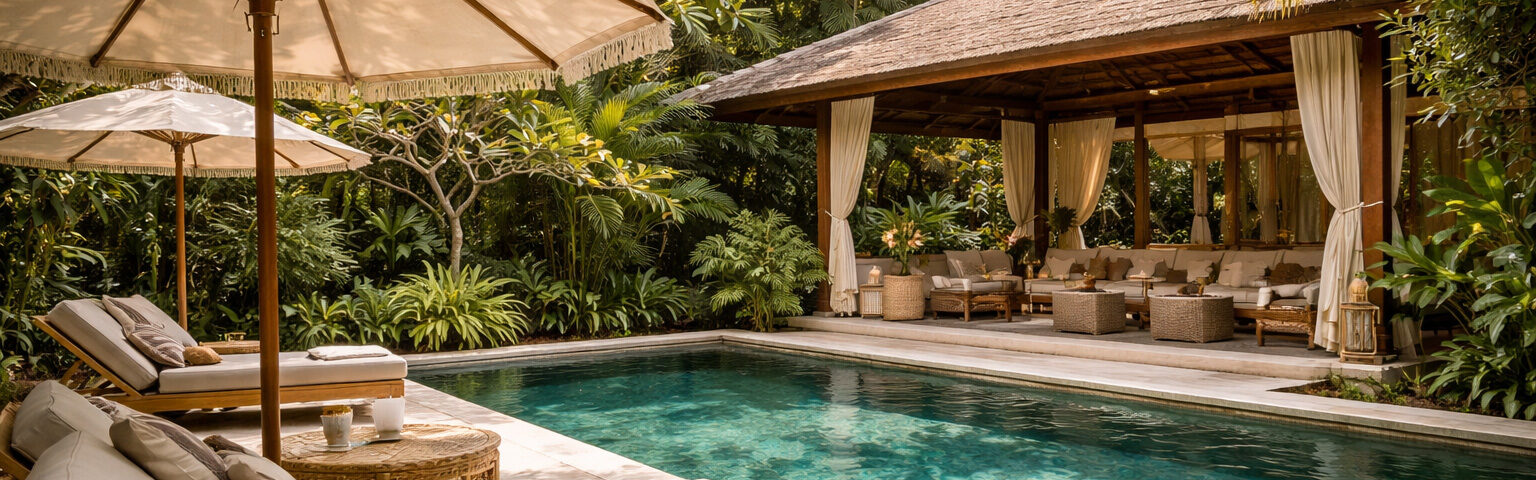
There is also a visual reason shade matters. It softens the emotional tone of a space. Bright tropical light can be beautiful, but it can also feel intense when there is no contrast. Shade introduces relief, depth, and calm. It makes a room or terrace feel composed rather than exposed. Even a simple overhang, a covered pavilion, or filtered planting can create a much gentler atmosphere.
This matters because travellers rarely remember only what a property looked like. They remember how it felt at different hours. A shaded breakfast space, a protected corner beside the pool, or a covered daybed that stays inviting long after the morning can contribute more to memory than dramatic visual features ever do.
The Best Outdoor Spaces Are Usable All Day
Truly successful Bali stays usually include at least one outdoor area that works across changing conditions. Morning sun may suit coffee or reading, but by midday most people want softer light and cooler surfaces. By late afternoon, that same shaded zone often becomes the place where conversation, drinks, or a slower kind of downtime naturally happen.
That continuity gives a property its ease. Instead of treating outdoor living as an occasional extra, the stay supports it throughout the day. Guests do not need to retreat indoors simply because the weather has become more demanding. They can remain connected to the air, the garden, and the atmosphere of the place without sacrificing comfort.
Planting Can Create Better Shade Than Structures Alone
Some of the most beautiful shade in Bali does not come only from roofs or umbrellas. It comes from planting. Trees, layered tropical foliage, climbing greenery, and garden edges all filter light in a softer way than fixed structures can. They create movement, pattern, and a more natural sense of enclosure. This is one reason landscaped properties often feel calmer than bare ones, even when their layouts are otherwise similar.
In warm climates, greenery can also help moderate the feeling of a space. It cools the visual field, softens hard materials, and makes transitions between architecture and garden feel more natural. For a broader environmental perspective, the overview of the subak irrigation system is a reminder that Bali’s relationship with water, cultivation, and landscape has long shaped how the island is experienced and organised.
Shade Encourages a Slower Pace
Perhaps the most underrated effect of shade is that it encourages people to slow down. A comfortable shaded space invites lingering. It makes long breakfasts possible, afternoon reading more attractive, and simple conversation easier to enjoy. The stay becomes less about escaping the heat and more about inhabiting the environment well.
This is especially important in Bali, where travellers often seek a softer pace than they live with at home. A property that offers places to pause naturally supports that intention. It turns outdoor life from a visual promise into a real daily pleasure.
A Small Detail With a Big Effect
In the end, shade matters so much in Bali stays because it makes beauty usable. It protects comfort, softens light, expands how a space can be enjoyed, and helps accommodation feel calm rather than merely photogenic. It is one of those details people may not think to prioritise when booking, but often end up appreciating every single day once they arrive.
That is why the best Bali stays rarely rely on openness alone. They balance openness with shelter, light with relief, and exposure with ease. When they do, the whole stay feels better — not because of one grand gesture, but because the space works quietly and well from morning through evening.