
Beach & Island Style
How Bali’s Indoor-Outdoor Design Creates a Better Stay
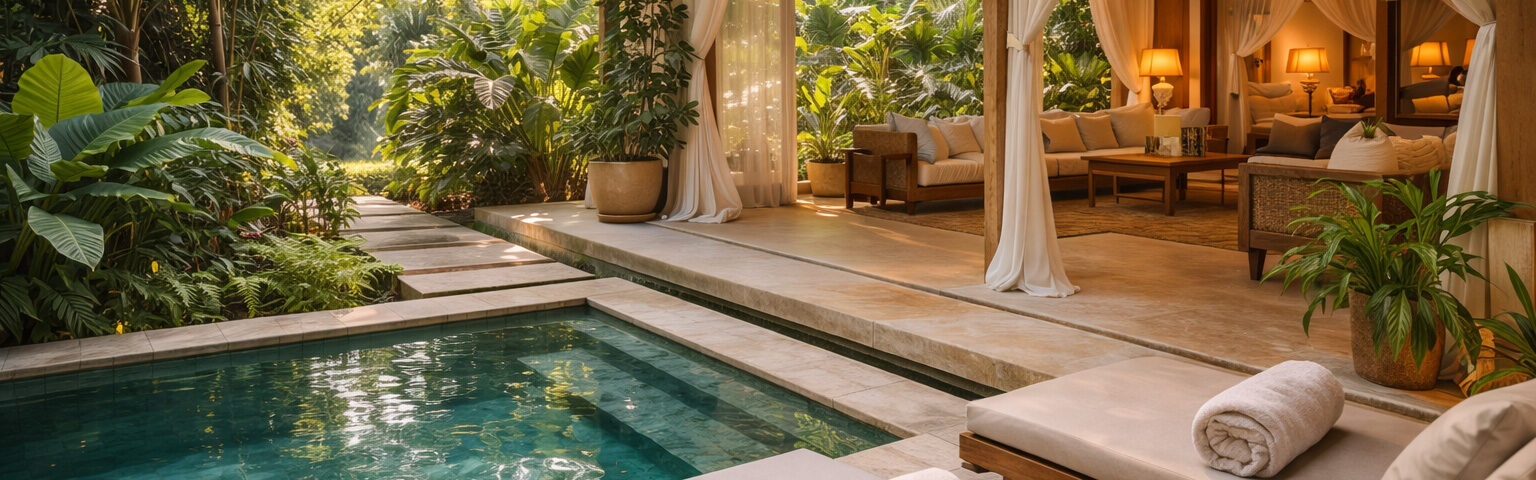
One of the most distinctive things about staying in Bali is how naturally daily life seems to move between inside and outside. A lounge opens toward a garden instead of ending at a wall. A dining space feels connected to the air rather than sealed away from it. A covered terrace becomes part of the living area rather than an afterthought. In Bali, this kind of indoor-outdoor design does not feel like a stylistic extra. It feels like part of the logic of the island, and it is one of the reasons a stay here can feel so much more restful than a more conventional hotel experience.
Good design in Bali often works through openness rather than display. It allows climate, texture, planting, and light to shape the experience of a property. That openness changes the way travellers use space. Instead of moving between rigidly separated rooms, they move through transitions — terrace to living area, courtyard to bedroom, pool edge to breakfast table — and those transitions create a much softer rhythm to the day. For a broader view of how architecture responds to tropical environment, ArchDaily’s overview of tropical architecture is a useful reference point.
Why the Layout Feels More Relaxed
Traditional indoor-outdoor design works so well in Bali because it reduces friction. Spaces do not feel overly compartmentalised. You are not constantly passing through doors, corridors, or sealed temperature shifts. Instead, the property feels connected in a more fluid way. The living room may already be half outdoors. A bathroom may include planting or open air. A garden path may become part of the transition between sleeping and social spaces.
This has a real effect on how a stay feels. Layout influences mood. When movement through a property feels natural, everything becomes easier: mornings unfold more gently, mealtimes feel less formal, and downtime feels more inviting. Bali’s best stays often succeed not because they are elaborate, but because they remove unnecessary barriers between people and place.
Natural Materials Make a Difference
Another reason these spaces feel so good is the material palette often used to build them. Timber, stone, woven fibres, soft plaster, linen, and textured flooring all help create warmth without heaviness. They absorb light differently from glossy surfaces and tend to age in a way that feels more human. Rather than creating a polished but anonymous look, they contribute to an atmosphere that feels grounded and lived in.
In Bali, these materials are especially effective because they fit the surrounding environment. Greenery, warm air, filtered light, and shaded structures all work together. The result is not simply visual beauty, but a stronger sense of coherence. The property feels like it belongs to its setting, and travellers feel that intuitively even if they do not describe it in design terms.
Light and Air Become Part of the Experience
In more enclosed accommodation, air-conditioning and artificial lighting often dominate the feel of a space. Bali’s indoor-outdoor design tends to shift that balance. Natural ventilation, diffused daylight, and shaded openness become more important. Even where modern comforts are fully present, the best spaces do not feel cut off from the climate around them.
That is part of what gives a Bali stay its softness. Morning light enters differently. Evenings settle in more gradually. Covered outdoor spaces remain usable throughout the day, and rooms feel less isolated from the atmosphere outside them. This is not only aesthetically appealing; it is psychologically calming. It makes the stay feel less mechanical and more responsive to the day itself.
Gardens Are Not Just Decoration
One of the strongest elements in Bali design is the way planting is integrated into accommodation. Gardens are not simply there to frame the property in photographs. They often act as part of the architecture. They soften walls, shape privacy, filter views, and make transitional spaces feel cooler and more intimate. In many stays, the garden is what gives the whole property its emotional centre.
This matters because greenery changes how people inhabit a space. A breakfast area overlooking planting feels different from one facing a wall. A pool framed by foliage feels more secluded. A pathway edged with trees or tropical plants makes moving through the property feel slower and calmer. In Bali, design often succeeds because it uses nature as structure rather than ornament.
The Climate Supports This Way of Living
Indoor-outdoor design works here because Bali’s climate allows it to. Warm temperatures make open spaces practical, while shaded roofs, courtyards, and terraces provide protection from stronger midday sun or tropical showers. That relationship between architecture, landscape, and daily life is one of the reasons Bali’s built environment feels so distinctive. For broader context, UNESCO’s overview of the Cultural Landscape of Bali Province helps explain how land, water, and human design have long been connected on the island.
A Better Stay Through Better Atmosphere
What makes Bali’s indoor-outdoor design so powerful is that it improves a stay without making itself overly obvious. It works in the background. It shapes the rhythm of mornings, encourages longer breakfasts, makes afternoons feel calmer, and gives evenings a more natural sense of transition. Travellers may not always identify the architecture as the reason they feel better in a place, but very often it is part of the answer.
In the end, this is one of Bali’s quiet strengths. It offers accommodation that does not simply contain a trip, but helps define its atmosphere. When design allows air, light, planting, texture, and openness to work together, the result is not just attractive. It is deeply relaxing — and that is often what makes the stay memorable.