
Beach & Island Style
Why Natural Materials Matter So Much in Bali Stays
Some places look attractive in photographs but feel surprisingly flat in real life. Others create an immediate sense of warmth the moment you arrive. In Bali, one of the biggest reasons for that difference is material choice. Timber, stone, linen, woven textures, matte finishes, and soft plastered surfaces all shape the emotional temperature of a stay. They do more than decorate a room. They influence how light behaves, how air feels within a space, and how easily travellers relax once they are there.
Bali is especially sensitive to material because the environment is so present. Light is stronger, air moves differently, and gardens or courtyards are often integrated into the accommodation itself. In that setting, natural materials tend to feel more convincing than anything too polished or synthetic. For a broader architectural overview, ArchDaily’s feature on Bali’s balance between tradition and modernity gives useful context for how the island’s built spaces continue to evolve.
Warmth Comes From Texture, Not Excess
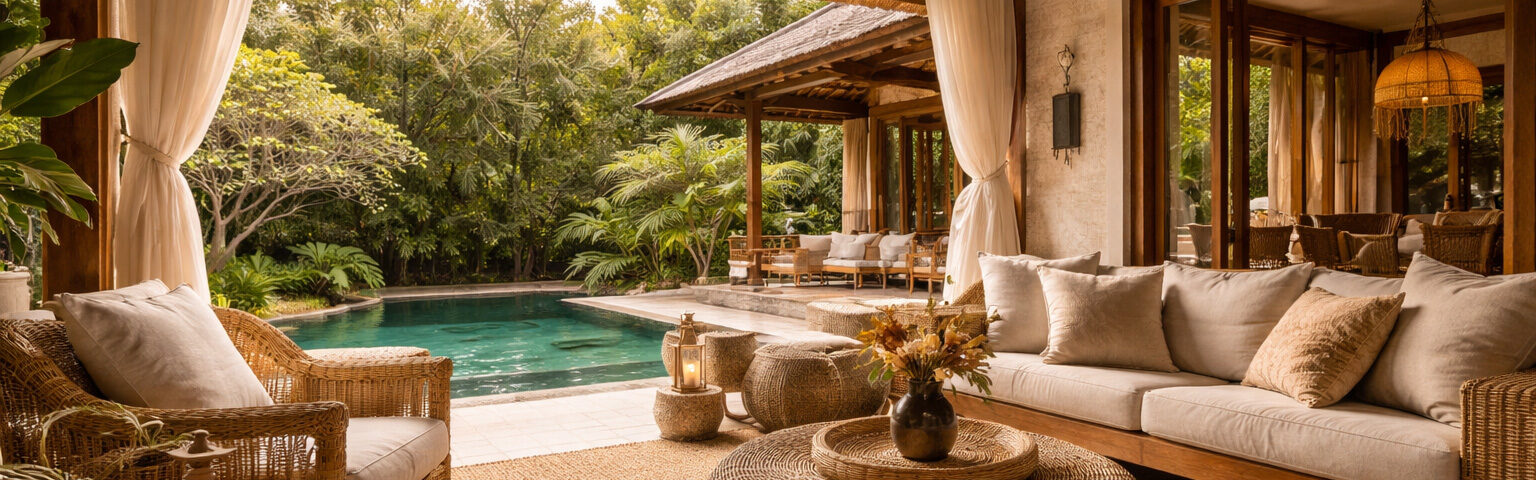
One of the most appealing things about well-designed stays in Bali is that they rarely need to be visually loud. The strongest spaces often rely on texture rather than statement. A timber ceiling, a woven chair, a stone floor softened by natural light, or a linen curtain moving slightly in the breeze can create more atmosphere than a collection of decorative gestures. These details make a room feel inhabited rather than staged.
This matters because comfort is not only physical. It is also emotional. A room lined with hard reflective surfaces may look expensive, yet still feel cold. By contrast, natural materials absorb light and soften edges. They make a stay feel less temporary and more rooted. In Bali, where so much of the experience is about atmosphere, that sense of groundedness has enormous value.
Timber Helps a Space Feel Human
Timber is one of the materials most closely associated with Bali stays, and for good reason. It adds warmth without heaviness and creates a more human scale within large or open-plan spaces. Whether used in roof structures, furniture, doors, or detailing, wood tends to make accommodation feel more welcoming. It carries grain, variation, and depth that synthetic substitutes often flatten out.
It also works beautifully with tropical light. In the morning it glows softly; in late afternoon it deepens. That changing response to the day helps a stay feel alive in a subtle way. Rather than remaining static, the space shifts with the hours, which makes it easier to feel connected to where you are.
Stone Creates Calm and Permanence
If timber gives Bali stays warmth, stone often gives them calm. Walls, steps, floors, courtyards, and pool surrounds all benefit from materials that feel stable and tactile. Stone can cool a space visually and physically, but in Bali it rarely feels severe. Used well, it balances the softness of planting, fabric, and filtered light. It gives architecture a sense of permanence without making it feel formal.
This balance is one reason stone remains so effective in tropical accommodation. It helps open spaces feel anchored. It also connects built form to the surrounding landscape more convincingly than many artificial surfaces do. In Bali, that continuity between property and environment is one of the things that makes a stay memorable.
Woven Details Soften the Whole Atmosphere
Another essential part of Bali’s visual language is woven texture. Rattan, cane, basketry, and similar materials appear in lighting, seating, trays, accessories, and architectural details. These elements matter because they soften interiors without making them feel fragile. They bring pattern and tactility into a room in a way that feels relaxed rather than overly formal.
This softness is especially important in stays that want to feel quiet and easy. Woven materials suggest craft, but they also suggest informality. They help a space feel welcoming rather than performative. That relaxed quality is often part of what travellers respond to, even if they do not consciously register the material itself.
Natural Finishes Work Better With Light and Air
In enclosed city hotels, heavily controlled surfaces can work well. Bali is different. Here, the environment wants to enter the experience. Air moves through rooms, humidity affects touch, and daylight shifts constantly. Materials that can live well with those conditions tend to create more successful stays. Matte finishes, breathable fabrics, and surfaces with texture generally feel more comfortable than high-gloss treatments that can look sharp but feel disconnected from the climate.
This is part of why Bali’s best accommodation often feels easier on the senses. There is less visual aggression. Light diffuses more softly. Surfaces invite touch rather than merely reflect it. The result is a calmer, more habitable atmosphere.
Place Feels More Convincing When Materials Belong
Travellers do not always articulate it this way, but people notice when a stay feels consistent with its setting. Materials play a huge role in that consistency. When timber, stone, planting, and open-air design are used thoughtfully, the property feels like it belongs to Bali rather than being dropped into it. That sense of belonging adds authenticity without needing to become theatrical.
Traditional Balinese architecture has long used ornament, texture, and symbolic detail to connect buildings with meaning as well as atmosphere. Visit Bali’s piece on symbols in Balinese architecture is a useful reminder that materials and decorative elements on the island often carry cultural significance beyond pure aesthetics.
A Better Stay Begins With the Surfaces Around You
In the end, natural materials matter in Bali stays because they shape how a place is experienced moment to moment. They make rooms feel warmer, terraces feel calmer, and transitions between indoors and outdoors feel more natural. They support quiet rather than noise, atmosphere rather than display, and comfort rather than spectacle.
That may be why the best Bali stays often feel so memorable even when their beauty is understated. The materials do not simply decorate the setting. They help create the feeling travellers came for in the first place.